Land Sachsen-Anhalt inaugurated a new sustainability bond framework last week, and the addition of a green label for the first time helped it navigate political headlines and market volatility to sell a successful €500m five year, which head of treasury Markus Krause said addresses environmental issues critical to the state.
Sachsen-Anhalt (Saxony-Anhalt) had so far issued social bonds, initially in its 2023 debut focused on a special Covid-related fund, and since expanded to take in social expenditures that generally make up the bulk of German states’ budgets. With a smaller budget than its larger peers who had issued benchmark-sized green bonds or included green use of proceeds in sustainability bonds, finding sufficient green expenditures to make a green bond project feasible for Sachsen-Anhalt was more difficult. Within the state’s budget of around €15bn, the scope for eligible expenditures is further limited by the exclusion of around 80% of expenditures that are determined by federal laws.
However, the state took up the challenge last year when more reviewing the sustainability characteristics of its budget.
“We had a detailed look into the entire budget of the state, going through almost 9,000 line items, trying to tag them with the relevant UN SDG,” Krause, head of treasury at the Sachsen-Anhalt Ministry of Finance, told Sustainabonds. “We then had a broad overview of which themes and budget items could be more relevant.
“We had a small project group in my department and we used rental bikes to go to every ministry, talking to them for hours to get a better idea of exactly what they were doing and which numbers they had, because we wanted to know if these were topics really were eligible, what the impact could be, and what additional information we could offer for investors.”
Ultimately, they uncovered sufficient green expenditures for a benchmark size green bond, with the indicative portfolio being around €568m going into the transaction.
The result is a new sustainable bond framework completed in September and encompassing both green and social use of proceeds. DZ Bank and NatWest were joint sustainability coordinators, with Sustainable Fitch providing the second party opinion.
Sachsen-Anhalt’s framework includes six eligible green categories: renewable energy; pollution prevention and control; environmentally sustainable management of living natural resources and land use; clean transportation; climate change adaptation; and sustainable water and wastewater management.
“We have some topics that are very particular to the state,” said Krause, “especially flood protection – we have been impacted by two massive floods in the past 20 years – but also pollution prevention – because of our history, the remediation of contaminated sites is a huge topic.”
The choice of categories and projects should also mean that the green bond initiative does not prove contentious, whatever the ebbs and flows in broader political and public sentiment around ESG, he added.
“It was really important that we try to keep politics out of the framework,” said Krause. “That meant focusing on topics that have been critical for the state and which will continue to be so.
“And the chosen topics are so relevant for every inhabitant of the state that we do not see them as politically-driven – they are essential areas where the state needs to keep moving forward.”
Politics was nevertheless on the issuer’s radar when it was considering its funding programme of around €3.5bn at the start of the year, with elections to the state parliament on 6 September a key date.
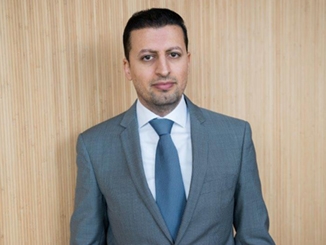
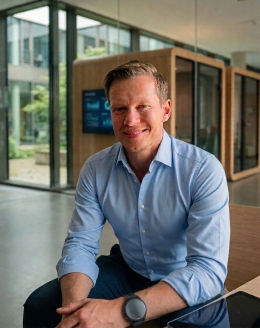 “We knew that there would be a lot of focus on the results,” said Krause (pictured), “so we thought that maybe it would be good to have a green bond as the last transaction of the year – we hoped that the green label would offer a little bit of insurance.”
Alternative für Deutschland (AfD) made headlines by winning with 43.8% of the vote, putting it in a position to be the first far right party to control a German state since the second world war.
Krause said the issuer was also aware that the autumn market could also prove tricky – it having been the case last year – and after the mandate was announced on 1 October, it proved to be even more challenging than might have been expected.
“The market was very shaky and we realised that this was an investors’ market,” he added, “with a lot of insecurity, and when there is insecurity, you will definitely see it reflected in the pricing. We had a lot of discussions with all the banks, highlighting that our main goal was to have a healthy outcome, with a fairly priced deal, and day by day the pricing went up.”
With a virtual roadshow having raised expectations that the inaugural issue would hit the market and Sachsen-Anhalt having coordinated its calendar slot with the other Länder, it took the plunge on Monday of last week (12 October).
Leads BayernLB, Crédit Agricole, DZ, ING and NatWest opened books with guidance of the mid-swaps plus 13bp area for the €500m no-grow five year green bond, expected ratings Aa1/AAA/AAA (Moody’s/Fitch/Scope).
“With the price discovery we’d had, we really thought that we had a level that would be fair for investors but also fair for us,” said Krause. “And then we came to the market and, honestly, for 30 minutes, it was rather silent. Investors wanted a signal that it was really fair value in the market’s view, and that took some time.
“In the first 45 minutes, we saw the domestic bid, and after this, we saw a lot of international demand.”
After an hour and a half, the spread was set at 13bp on the back of books above €535m, including €65m of joint lead manager interest.
“When we passed €500m and could announce a book update, you could see it was like an on switch – five minutes later we had €300m more in the book, 10 minutes later €1bn was reached, and 20 minutes later we had €1.2bn,” said Krause. “So in the end the demand was there and investors genuinely felt it was a fair price.”
The final book was above €1.2bn, including €150m of JLM interest.
“It was rather stressful, because we had put in so much work on this wonderful project,” he added. “But in the end we had a result that we had hoped for, with two times oversubscription, and two-thirds of the bond sold out of Germany.”
“I’ve been doing this job for four-and-a-half years, and have done several transactions, but this will be the transaction I will remember years from now.”
Germany, Austria and Switzerland took 38% (of which Germany accounted for 33%), the UK 20%, Asia 15%, CEE 12%, the Nordics 8%, the Benelux 5%, and other Europe 2%. Banks were allocated 40%, central banks and official institutions 36%, and asset managers and fund managers 24%. [The geographic shares don’t match the BayernLB deal review.]
“We are very proud of the huge international share,” said Krause. “We really hoped that the green bond would be insurance towards reducing the execution risk and increasing our chances of successfully raising the €500m, but also in attracting attention from different investors.
“There was no discussion about a greenium,” he added. “My personal view was that it’s not the time for this; it was a question of achieving a healthy outcome and ensuring that investors are rewarded for putting orders into the book.”
Some 40% of the bond was allocated to real green accounts.
“It’s perhaps surprising that this was not the major part,” said Krause. “But, as an investor said: it’s not the time for the ESG teams; it’s more the time for the PMs and for the market decision.”
Having added green to its funding, Sachsen-Anhalt is set to return to social for its next sustainable bond issuance.
“It was wonderful to have a green bond,” said Krause, “but now we will need to wait, because it could take some time to find again the assets for another one. For the next one and possibly two years, we plan a social bond issuance each year. The majority of our expenditures are on the social side and we have had great experiences in the social bond sphere.
“We have also decided that we will definitely stay focused on green and social – so no sustainability bond. That was also something that investors raised, that when we approach the market, they would prefer a very focused issuance.”