
2025 has seen the landmark opening of EU Green Bond issuance by banks. Together with sponsor NORD/LB, Sustainabonds gathered together the pioneering issuers from the sector alongside buyside representation in Amsterdam in December, to find out the key challenges faced by the inaugural issuance, how the banks achieved their goals, and what lessons can be learned from their experience if the EuGB market is to deepen in 2026 and beyond.
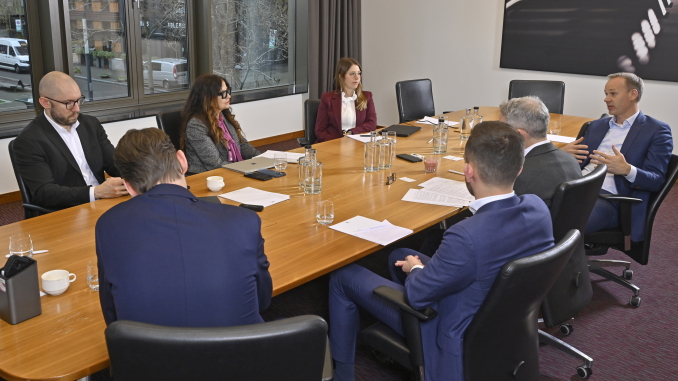
Participants in the 2 December roundtable (left to right in photo):
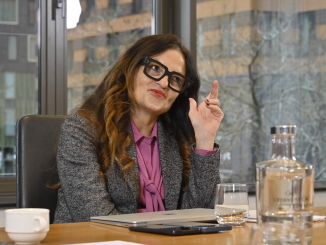
Daniela Antonini, Funding & Capital Management – Sustainable Funding & Advisory, Banco BPM
Clemens Lukitsch, Funding Officer, DKB
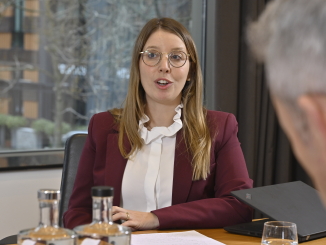
Samira Lampe, Head of DCM & Syndicate, NORD/LB
Peter van der Noord, Funding Manager, ASN Bank
Neil Day, Managing Editor, Sustainabonds
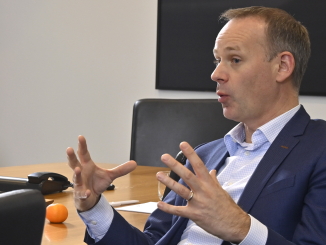
Bram Bos, Global Head of Sustainable & Impact Fixed Income, Goldman Sachs Asset Management
Ruud Jaegers, Head of Long Term Funding & Capital Issuance, ABN AMRO
A pdf of the roundtable can be downloaded here.
Neil Day, Sustainabonds: Before we go into the issuers’ motivations for adopting the EU Green Bond Standard (EU GBS) for their issuance, Samira, perhaps you could remind us of its raison d’être.
Samira Lampe, NORD/LB (pictured): Looking back, the Green Bond Standard was recommended in the final report of the Commission’s High Level Expert Group on sustainable finance and was intended to set a kind of gold standard for green bonds. But essentially, EU Green Bonds (EuGBs) do the same thing as other green bonds: they are used to finance assets necessary for the climate transition. While the essence of both products is the same, the EU wanted to create a high integrity, trustworthy and transparent framework for green bonds, and to integrate it into wider EU regulation, like the EU Green Deal and, of course, the EU Taxonomy.
 If we look at the objectives of the EuGB regulation, they can be seen as fivefold. Firstly, the objective is to ensure credibility and prevent greenwashing. That’s why the EuGB regulation sets quite strict rules on what counts as green, how proceeds are allocated, and what kind of information issuers must disclose. And then there’s the element of external verification. Secondly, it’s intended to channel capital into genuine sustainable projects — that’s why there is the EU Taxonomy link. Thirdly, the EuGB intends to increase transparency, especially for investors, through the standardised disclosure. Moreover, the intention was to provide a more unified benchmark for the green bond market. So in Europe, it’s seen as a quality label that is complementary to other existing market-based principles. And last, but not least, the EuGB supports EU climate policy on sustainable finance — the Paris Agreement, net zero strategies, the implementation of the EU Taxonomy, and the Green Deal, which are needed to finance the climate transition the EU is working towards.
In short, the purpose of the EuGB is to provide a robust, transparent and taxonomy-aligned framework to boost market confidence and channel capital into truly sustainable European projects.
Day, Sustainabonds: There was initially some scepticism around the extent to which issuers might be willing and able to adopt the EU GBS, but all of you issuers here today have progressed from the Green Bond Principles to the Green Bond Standard. How did your thinking and strategy develop? Perhaps I can ask you in reverse order to which you issued your EuGBs.
Clemens Lukitsch, Deutsche Kreditbank: DKB, doing business with only German clients, has one of the largest, if not the largest onshore new energies portfolios, i.e. wind farm and solar plant financing, in Germany. This was already part of the ICMA-aligned green bond pool. We felt it would then be straightforward to use these assets under the new EU Green Bond Standard. We published our new framework for the ICMA bonds at the beginning of 2025 and ISS, our second party opinion (SPO) provider, already confirmed that the assets were Taxonomy-aligned. That was the hard part, and setting up the EuGB factsheet was the easy part.
So given that we have the assets and that the path for us to issue was clear, we said, let’s do it. It fits the overall strategy of the bank and broadens the funding options of the treasury. We also want to keep our reputation as being a sustainable bank, and issuing EuGBs promotes that message and strengthens the brand.
Our first experience was pretty good and we will continue issuing. We are happy to see volumes picking up. Maybe some people have been a little critical, asking if this really would become a standard, but with more and more issuers adopting it, I’m quite confident about its prospects.
Peter van der Noord, ASN Bank: We issued our first green bonds, ICMA-aligned green bonds, in 2019, and committed to all our unsecured issuance being in green format. Among Dutch banks, we belong to those with the most sustainable profile. We are very focused on being as transparent as we can in everything that we do. As a retail bank, our main activity is providing mortgages, so they constitute the bulk of our assets. We have a renewables portfolio, but it’s relatively small.
Our situation was similar to DKB’s, in that at the start of the year we wanted to update our green funding framework, and approached ISS to make sure that we have Taxonomy alignment. That was already achieved by April, but ultimately the overall process took some time because we had the name change from de Volksbank halfway through the year and that held us up a bit.
The main Taxonomy category is 7.7, acquisition and ownership of buildings. We have renovations on the balance sheet, but, when we checked, these were not fully Taxonomy-aligned, due to some differences in the Netherlands compared to EU standards. However, we wanted to already show in our framework that we have these assets, even if they are not fully aligned, because we want to be as transparent as possible. As renewables are not the focus for us, we did not have them tested for Taxonomy alignment.
It was then very easy to do the factsheet. Most of it is copied from the framework, because we didn’t want to have differences between the factsheet and the framework.
For us, it was important to remain a frontrunner in this field, to show that we take this topic seriously, to take things a step further, and also to set an example in terms of responsibility and also accountability — that’s why we chose to go ahead with the European Green Bond.
Coincidentally, it was the first issuance under the new name, so I think that helped us gather a little bit more attention towards this issuance as well.
Daniela Antonini, Banco BPM (pictured): We were the first Italian bank to issue under the EU GBS. We started our green journey back in 2018 with green mortgages, in conjunction with the Energy Efficient Mortgages Initiative. We then published our first green bond framework in 2021 and issued a first green covered bond in 2022.
 We updated our framework with Taxonomy alignment late 2023, and this was the real step forward. We wanted to be not just green, but Taxonomy-aligned. So we introduced the criterion of taxonomy alignment for the mortgages, for the buildings, and for the renewables. As the others have indicated, this was the most difficult part, because getting the Taxonomy alignment and the second party opinion was really a very long journey. Back in 2023, things were less clear than they are today. It took some months, and we had to work a lot with all the departments of the bank, the credit, the risk, the sustainability and the commercial departments, trying to design the processes for granting the loans, the management of data, and so on. But we got there. Then the factsheet was indeed the easiest part.
Our main reasons for issuing under the EU GBS are that we already had a Taxonomy-aligned framework in place and we wanted to push alignment of loans inside and outside the bank, and because we believe strongly in standardisation and transparency towards the market. Additionally, we wanted to demonstrate that a mid-sized Italian bank could also issue an EuGB. We are a small team, but very motivated, and in the end, we did it. From a funding point of view, we have added another instrument, and it has proven very successful. So this has been the business case for Banco BPM.
Day, Sustainabonds: Ruud, you were the very first bank to issue and have already followed that up — not least this morning with the first sterling EuGB. What explains the bank’s position at the forefront of this field?
Ruud Jaegers, ABN AMRO: ABN AMRO has been pioneering in the green bond area since 2015, when we issued the first ever euro senior green bond from a commercial bank. Thanks to my colleagues, we’ve built a certain track record since then. And at a certain point, 2018-2019, the group strategy of ABN AMRO was leaning more and more towards sustainability, with one of the three strategic pillars dedicated to sustainability. That all gave us a good backdrop to continue on this journey.
When we first learned about the Taxonomy and the potential EuGB label, we were initially reluctant to go down that path, simply because of the lack of clarity. We are happy to invest time in developing and refining our approach once the guidelines are clear and the checks and balances we need to adhere to are established. So once we had clarity, in late 2023, we started updating our green bond framework and in February 2024 republished it with Taxonomy alignment. The one thing we couldn’t do at that point was complete the factsheet as we had to wait until year-end 2024 for the regulations to allow the external reviewers to be registered. At that point, we had to complete the factsheet based on our Taxonomy-aligned framework. That may look like a simple job, but it was quite challenging, because the factsheet appears to be more designed for issuers applying a single bonds approach, not for issuers that apply a portfolio approach like us. Ultimately, after a bit of back and forth with the SPO provider, we solved for that.
We did not necessarily have the ambition to be the first FIG issuer; we did have the ambition to do it well and to be on the front foot. Ultimately, it turned out that we were the first bank. And had we not been in blackout, we could have been literally the first issuer this year.
We have already heard a lot of valid arguments in favour of moving from ICMA green to EuGB. Investors like standardisation, they like the harmonised approach. Funnily enough, I haven’t heard much feedback from the investor community on one key benefit of EuGBs, which is that Article 9 funds can basically rely on the EuGB label and don’t need to invest a lot of time and effort otherwise in investigating the Taxonomy alignment of, for example, an ICMA green bond. Ultimately, that should perhaps be a bit of a stronger benefit than we’ve heard so far.
Day, Sustainabonds: Samira, what would you highlight as the key differences between the Green Bond Principles from ICMA and the EU Green Bond Standard, and moving from the former to the latter?
Lampe, NORD/LB: The most important point is that market-based principles, like ICMA’s Green Bond Principles, and the EuGB regulation are complementary. You don’t have to choose between one or the other; an EuGB bond can be an ICMA green bond, too. It’s very important to recognise that the regulation was drafted in a complementary way.
Nevertheless, in most parts, the EuGB Standard is a little stricter than the Green Bond Principles. What stands out most is the EU Taxonomy link and alignment that is mandatory under the EuGB regulation, but not necessary under the Green Bond Principles. What I would take away from the issuers’ comments so far is that once you have ensured that your green bond is Taxonomy-aligned, publishing the additional factsheet and post-issuance reports to meet the EuGB is not a big step. The bulk of the work goes into the Taxonomy alignment. The factsheet, which is not part of the ICMA Green Bond Principles, is essentially a document that intends to standardise disclosure and make investors’ lives easier.
Another aspect where the two approaches differ is the grandfathering. If there is a change in the technical screening criteria of the EU Taxonomy, issuers will need to ensure that within a period of seven years there will be a sufficient amount of green assets that meet the updated Taxonomy criteria. Additionally, an external pre and post issuance review is mandatory under the EuGB regulation while this is only voluntary, or a recommendation under the ICMA Green Bond Principles — although such an external review is effectively market practice and a requirement by most investors, which is why the ICMA green bonds mostly have a second party opinion. Another new aspect under the EuGB Standard is that the external reviewers need to be certified by ESMA. The group of ESMA-approved providers does not only contain the well-known SPO providers; additionally, many auditors qualified and are used for the EuGB verification service, which is particularly evident on the corporate side rather than on the FIG side.
Interestingly, under the EuGB regulation, I understand, an impact report is required following the full allocation of the proceeds at least once by or at the maturity of the bonds, whereas ICMA recommends annual reporting. So here, one could argue that ICMA is slightly stricter.
And last, but not least, one aspect that stands out with the EuGB is the regulatory component, because ultimately each national competent authority is responsible for enforcing the EuGB regulation. The prospectus language will include standard risk factors related to ESG commitments.
Day, Sustainabonds: Bram, on the investor side, are you happy to see the pick-up in EuGB issuance? What are the benefits?
Bram Bos, Goldman Sachs Asset Management (pictured): I think there are benefits for issuers to use the EUGB label.
On our side at Goldman, we launched the first green bond strategy, in 2016. We started with only a small amount; the labelled bond strategy (mostly green bonds) has now grown to more than €13bn (end of November 2025). This includes only dedicated labelled and green bond portfolios. That highlights the additional demand issuers can achieve through labelled bonds, with dedicated green investors on top of investors who are not dedicated to green bonds.
 The EU GBS are becoming increasingly relevant from a regulatory perspective. I would not say that under SFDR, Article 9 eligibility is by definition something that automatically leads to more demand for EuGBs, because each investor has its own definition of a sustainable investment. For example, in GSAM’s green bond screening process, we might apply additional exclusions to eligible bonds. There was a Finnish utility company that was not eligible for our green bond strategy for that reason, even if it is a fund that is disclosing under Article 9 of SFDR.
But the EU GBS is positive in providing more transparency and standardisation. Under SFDR, Article 9 funds need to make a Taxonomy commitment, and currently most funds have still put this at 0%. For our green bond strategy at Goldman Sachs Asset Management, depending on the universe, the EU taxonomy commitments range from 10% to 25%. Therefore, the Taxonomy alignment of the underlying assets and projects of green bonds is critical for us in making sure that we meet this threshold. The challenge that we have been facing is that there was no data available on Taxonomy alignment on a bond-by-bond level from any provider, it was only available on an issuer level. When we do our Taxonomy calculation for our strategy, it makes our life so much easier if we don’t have to do the calculation ourselves, but if we get data from the issuers (which is normally included when issuers issue a EuGB), because if we have a portfolio with 200 bonds in it, it’s very labour intensive to do all the calculations ourselves. From that perspective, the EU GBS really helps us a lot. That’s one part.
Then the second way in which it’s beneficial is in relation to the ESMA fund name regulation which became effective earlier this year. Under the fund name regulation, a fund can only be called “sustainable”, “ESG” or “green” if it meets certain criteria. Use of proceeds bonds can be exempted — most of them are, but there is a question mark. EuGBs are automatically exempted, so if any fund has sustainable or ESG in the name, it can always buy EuGBs. That is beneficial for issuers, too.
Jaegers, ABN AMRO: I would echo the point that it’s important to recognise that different investors have different criteria to determine whether an issue is sustainable or not. Some rely on external data. Some work with internally-developed methodologies. That makes our life complicated, because we’re not sure which we qualify for. And ultimately, as issuers, our goal is not only to focus on issuing a green bond in itself, but to diversify our funding across different jurisdictions, currencies, instruments and investor groups, and in that case, it’s really relevant to understand who can buy the bond.
Bos, GSAM: To add to my previous comments, a utility came to the market early this year, and whereas we didn’t accept their previous normal green bond issuance for our green bond strategy, their EuGB did pass our screening process. Previously, we hadn’t received enough information on the issuer and the relevant projects to meet our requirements, but through the EU Taxonomy, which is part of the EuGB factsheet, we got sufficient information in relation to their EuGB so that we could label it as green. That’s a really good example of the added value of an EuGB for issuers.
There’s also been a new proposal for SFDR whereby Article 9 funds have a little more flexibility and I think the Taxonomy is going to play a bigger role there, which may trigger some more demand for EuGBs.
Day, Sustainabonds: How was your experience in any interactions with the regulators in relation to your EuGBs?
van der Noord, ASN: If you want to issue EuGBs, you have to update the relevant programme, in our case the debt issuance programme ahead of the senior non-preferred bond, which the Authority for the Financial Markets (AFM) has to approve. We had a quite lengthy back and forth with AFM because — unlike for ICMA-aligned bonds — we are all still on something of a learning curve. Indeed, in moving from a green funding framework to having also an EuGB factsheet, this interaction with the regulator was the part of the process that took the most time. I imagine it’s a similar situation in other countries, because it will take a while before this is common practice.
Day, Sustainabonds: Would you issue a covered bond in EuGB format?
Jaegers, ABN Amro: No. We have explicitly said that we will use the green feature — whether simply IMCA green or also EuGB — for senior preferreds and non-preferreds. In covered bonds, I don’t really see the added value, because it’s already such a tightly priced product. Also, some regulators are not too happy with the introduction of green features into capital instruments, and hence, we are avoiding those, too.
I should note that, unlike Peter and ASN, we do not issue every bond in green. We look at what we want to issue, the relevance for the target investors, and discuss whether or not adding the green feature could be beneficial in terms of how we position ourselves versus potential competing supply.
van der Noord, ASN: We have similar considerations on covered bonds. In the Netherlands, covered bonds are usually a bit longer dated, which makes it much more difficult for us to guarantee that we will have enough assets that adhere to the EU GBS. That’s one of the reasons that we have not yet decided to issue green covered bonds, whether ICMA-aligned or EuGBs.
Lampe, NORDL/LB: Because you have the grandfathering risk.
van der Noord, ASN: Exactly. And on top of that, if you were issuing a green covered bond, you would have to report quite a bit under all the covered bond reporting standards, and you have to do that every month. And then it comes back to the data issue again: we have the data on the mortgages, so we should be able to provide it, but it’s quite a lot of work, mainly integrating everything into our covered bond reporting systems, and without any clear pricing benefit. With a limited asset pool, we choose to focus on seniors and capital first, and think about covered bonds later.
Jaegers, ABN Amro: Indeed, although we are a strong believer in EuGBs, it may well be that any longer deal we issue in the future, beyond seven years, might not carry an EuGB label because of the grandfathering issue.
Day, Sustainabonds: Ruud, how did the inaugural bank EuGB go and, bringing us right up to date, today’s sterling deal?
Jaegers, ABN AMRO (pictured): ABN AMRO had been well rumoured to be the first potential bank issuer in EuGBs and that rumour had probably reached investors, too. Despite the buzz in the industry, we probably expected to see a bit more demand for our first EuGB. That said, the bond was well received and we printed €750m at the anticipated spread.
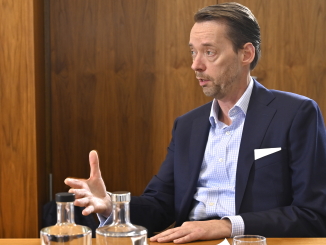 Today, the response was overwhelming. I don’t know if that is the result of the label having gained a bit more recognition or whether this results from us not having issued in the non-preferred format for a while. And it’s the first EuGB in sterling, so I’m not sure how to allocate the momentum we saw to the each of these considerations.
We are often asked what the benefits are in terms of deal dynamics when you issue a labelled bond, but it’s really hard to tell. At best, we see that some investors who are otherwise super-price sensitive will stay in the book when we issue in green. I can’t really see the difference in order sizes or the book size. And I can’t see a delta in the landing price — it’s really difficult for us to distinguish any differences with a non-green transaction. What I can see is that over time, as the bond matures, it trades a little bit better vis-à-vis a non-green transaction. But at the moment of issuance, it’s really difficult to discern a clear pricing benefit. I should probably note that this is the view of a frequent issuer; less frequent corporate issuers issuing in green might have different observations.
Day, Sustainabonds: How do your experiences with your debut EuGBs compare?
Antonini, Banco BPM: Our EuGB was very well received by investors. Asset managers constituted a high percentage, 57%, and insurance and pension funds 26% — an extraordinary result compared to previous issuance. We don’t have conventional bonds to compare this to, because since 2021 we have issued only social and green bonds — in 2024 we set a target in our strategic plan of €5bn of such issuance within three years, so we have to issue €1.5bn-€2bn each year in green or social format. We nevertheless saw a higher amount and better quality of orders with the EuGB than on green and social ICMA-aligned bonds, so it was a great result and we are very proud of the outcome. We highlighted the results to our management in order to show them that the EuGB is an important funding tool, and that we also had some benefit in terms of pricing. As the others have said, it’s difficult to measure exactly the number of basis points, because you really have to issue a conventional and an EuGB at the same time, maybe two tranches in the same tenor, to be able to do that. We did analyse how the order book changed when we tightened the spread, and we saw that almost all the investors labelled as dark green remained, with only one exception, and hence were not price sensitive. That was an excellent result and we were very happy.
Lukitsch, DKB: We saw a lot of similarities in our debut. For example, we had very good feedback beforehand, with a very good amount of indications of interest, which made us very confident. Unfortunately, the day of the execution was maybe not ideal. There were some really strong senior transactions the previous day, but when we launched our transaction there was a bit of negative sentiment in the market, and it also affected us. So we were a little disappointed, just because we had expected a stronger reception. However, although the oversubscription was limited, after tightening the spread 25bp, the book was, to our surprise, very stable — just as Daniella described. Even some investors who had set a limit didn’t pull out. And the tightening of 25bp for this senior deal was what we had hoped to achieve. Finally, when we looked over the book after execution, we saw some investors that would not have shown up if it weren’t an EuGB. So all in all, we felt that this label really helped the transaction and definitely offered some execution security. That has made us more confident in using it in the future, too.
Lampe, NORD/LB: So far, we have only seen 28 EuGBs across corporates, SSAs and financials, so drawing any conclusions regarding transaction dynamics attributable to the label is quite difficult. If you take the whole sample, you could argue that there is a little bit of a pricing advantage, that bid-to-cover ratios remain slightly higher compared to conventional bonds and even other green bonds, but I would consider that all as anecdotal evidence. And, especially looking at the FIG space, it’s much less straightforward to really identify significantly higher demand or lower new issue premiums. I think this may be connected to the financials market overall: spreads are at historically tight levels, and I’m not sure if investors will stay in a deal if spreads on ESG transactions are pushed even further. The feedback we have received is that investors value the EuGB label, but they will not buy the bonds at any price. That is something that needs to be taken into consideration.
However, if you look at the secondary market performance of the EuGBs we have seen so far, greater spread tightening compared to green bonds is evident. And another factor that needs to be considered is volatility: EuGBs tend to be less volatile.
Day, Sustainabonds: Bram, what’s your perspective from the investor side?
Bos, GSAM: As has been said, it’s a never-ending discussion when it comes to greeniums (greenium being defined as the difference between green bonds and non-green bonds of the same issuer, with the same duration). It’s very difficult to provide hard proof whether or not one specific single bond has been issued at a greenium. I do think there might be some benefits. A couple of years ago, it was a little clearer that a greenium existed. That has maybe vanished a little because of all the supply of green bonds in the last few years. For EuGBs in particular, it’s really difficult to draw any conclusions yet because of the low number of bonds issued under the EuGB label. We need many more bonds to compare to normal green bonds and to see how they trade in the secondary market, because that’s a good reference point for us. The volatility aspect is also very important. When the market has been quite volatile and investors need to sell liquid assets because of collateral calls, for example, labelled bonds are normally the last thing they sell, let alone EuGBs. So I can imagine that it’s more attractive for issuers to issue EuGBs, or green bonds in general, because they can probably issue them in a wide range of market circumstances, not only when there’s positive market sentiment, but also in stressed markets.
van der Noord, ASN (pictured)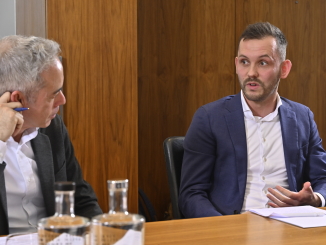 : On our debut, the only thing that was different from our ICMA-aligned bonds was a slightly quicker bookbuild. Apparently investors were quicker to decide whether or not they could invest in the EuGB, although that could have something to do with the fact that they’ve known us for a long time. We’ve been in dialogue with investors on green bonds since 2019, everyone knows we are always coming in green format, allocating towards green buildings. So arguably us coming with an EuGB should not have an impact on an investor’s decision whether to invest or not. Yes, it’s a new standard and more anchored in regulation, but other than that, nothing has materially changed. We also saw that in our discussions with investors — we barely received any questions on the factsheets. So I don’t think investors treated it very differently.
Lampe, NORD/LB: How much in advance did you publish the factsheet?
van der Noord, ASN: We published it on the Friday and went to market on the Monday.
Lukitsch, DKB: We published the factsheet one month prior to the transaction and updated it on 30 October following feedback from BaFin. In Germany, first-time EuGB issuers must submit their factsheet to BaFin for review. While BaFin does not assess Taxonomy-alignment of assets, they ensure compliance with the regulation and have the authority to impose sanctions or halt an issuance if requirements are not met. To avoid uncertainty, we waited for their response before proceeding and implemented all requested changes promptly, coordinating with ISS to confirm the validity of the external review. The process took about four weeks, which was longer than expected.
BaFin emphasised that the factsheet should closely align with the regulatory template, and paid particular attention to both formal aspects and certain content areas typically addressed by the external reviewer. Overall, the process involved detailed discussions to align expectations.
Lampe, NORD/LB: That’s interesting to hear, because, Peter, you said earlier that it was a straightforward process with the Dutch authority.
van der Noord, ASN: I understand that they have to make sure that you adhere to the regulation, so I see why this process exists, but I would say it almost defeats the purpose. It shows that there should be European standards around this and more homogeneity in the regulators’ approaches.
Lukitsch, DKB: Indeed, BaFin said that they might have to have a discussion with the other regulators about this. We sent them the ABN AMRO and Banco BPM factsheets, in order to draw attention to the documents already published by other European issuers. The main idea of EU regulation is to harmonise, so maybe it’s a good idea to keep it similar, also for the benefit of investors. Naturally, we looked at the factsheets of other issuers. How did they do it? What could we use? What worked well?
Antonini, Banco BPM: Our life was much easier. We listed in Luxembourg and therefore have CSSF (Commission de Surveillance du Secteur Financier) as the national authority. We were lucky, because we had initially planned to issue in late May, and therefore did all the work — the update of the prospectus, the factsheet and everything — in May, but ultimately we issued in October, so we had time to discuss with them.
The main issue on CSSF’s side was purely the labelling — if a bond is defined as a “European Green Bond”, CSSF does not allow it to have an additional label in its name, such as “European Green Bond and ICMA-aligned Green Bond”. So we indicated in the prospectus and final terms that European Green Bonds may also be issued in compliance with the issuer’s framework (and therefore also be ICMA green bonds, without, however, clearly stating that they constitute an ICMA-aligned Green Bond). That was sufficient for them.
But we had also seen that an earlier corporate issuer had two second party opinions, one in relation to ICMA alignment, and one for the factsheet and EuGB alignment, so we asked ISS about this. In the end, together we chose not to do two different second party opinions, but to mention in the SPO on the EuGB factsheet that Banco BPM follows the commitments set forth in the Green, Social, and Sustainability Bonds Framework as aligned with the Green Bond Principles. And I think investors were fine with this.
Bos, GSAM: One thing you mentioned, Peter, that the bookbuild went quicker, is quite interesting. That’s maybe also an indication that the information is more readily available and more standardised. I would see that as something positive.
We have also been asked by quite a lot of issuers why there are fewer questions about specific green bonds, frameworks, EuGBs these days. Many of them take that as an indication that there’s less demand. But I think that’s absolutely not the case. I think it’s more the opposite. It’s just that we are more familiar with a lot of issuers and green bond frameworks, exactly as you said. The standardisation that comes with EuGBs only helps in that respect. So, just to emphasise, if you get fewer questions from investors, it does not at all mean that there’s less interest.
Antonini, Banco BPM: Usually, I receive questions on the bank more than on the framework. Would this be the same for a EuGB, or it is less relevant?
Bos, GSAM: In my opinion, a lot of dedicated green bond investors probably have a similar approach, which is that you can have the greenest projects, but if, at the same time, 50% of your loan book is financing coal-fired electricity, how credible is that green bond? With EuGBs, the whole use-of-proceeds part is even clearer, but you still want to check that the bank isn’t financing controversial activities. So it’s very important, and maybe it is the check that most investors are doing.
van der Noord, ASN: To your earlier point, we took a conscious decision to make sure that the factsheet itself was a document that could be read on a standalone basis. Rather than having to go through all sorts of policies in different documents on top of our framework, if an investor wants to invest, they just have to look at the factsheet — although they are, of course, welcome to review anything else. That’s quite different from what some other issuers appear to be doing.
Lukitsch, DKB (pictured): We kept it very lean and referred to our sustainable bond framework. The factsheet only includes the green assets, while the bond framework includes also social assets, and investors can find all the relevant information there. If they want to dive deeper into our strategy and philosophy, they can find out more in further documents.
 We spoke to an officer of the European Commission who was apparently one of the people involved in creating the standard, and asked her if it would be possible to incorporate the factsheet in a larger framework. Her opinion was that, potentially, yes, it could be part of a single document as long as the investor is able to clearly distinguish the EuGB part. So, given how many different documents there are, we considered having one global framework for all the green, social, ESG funding activities — maybe that would be easier. For example, having the factsheet as an appendix to the overall finance framework. Ultimately, we were unsure about it and so decided against this. I think it was the right decision, because everyone, including BaFin, is still unsure about some aspects of it. But if she, as part of the Commission is open to it, maybe it needn’t be so strict, after all, and this is actually the right way to go. People should work out how to do it.
Lampe, NORD/LB: From an investor perspective, which approach do you prefer?
Bos, GSAM: If I specifically look at the different frameworks that cover more than one label — so green, social, sustainability, sometimes SLBs — in general it makes our life a little easier. Having one overarching framework, and then specifically a kind of appendix for the EuGBs, would probably make our life easier, too, because otherwise you have a few different frameworks that you need to keep track of. It’s similar to the questions we get on reporting, whether we prefer a portfolio or bond-by-bond approach — the portfolio approach is also easier for us.
Lukitsch, DKB: We had the possibility of getting a kind of limited assurance from ISS on the Taxonomy alignment of the portfolio, whereby they would check the individual projects, the assets. We considered it for some time, to be doubly sure of alignment, but then decided against it because the data availability on our side was so good that we were sure the assets were aligned. Is this something anyone else considered?
van der Noord, ASN: We did not consider it, because we already had our assets checked by our auditor for a couple of years now.
Antonini, Banco BPM: We had the CSRD, the Green Asset Ratio audited by the auditors, so even if there may have been some issues with the green bond before, we are now more sure. So it would have been an unnecessary complication.
van der Noord, ASN: The work that needed to be done for the Green Asset Ratio, where we also had a separate limited assurance for the allocation report, we’re going to keep on doing that now that we’re issuing EU Green Bonds as well. So you’ll probably have to have a section in your allocation report saying, oh, this is a European Green Bond, these are the assets. But since we’re anyway only using one category for both European Green Bonds and ICMA-aligned, nothing much changes for us.
Lukitsch, DKB: Have you thought about relabelling old ICMA bonds into EuGBs? They mentioned this in the FAQs and it is possible.
van der Noord, ASN: That’s a good question. I’m not sure what the benefit would be for anyone, but I’d be curious to see if anyone does this.
Bos, GSAM: A few years ago, a French REIT issued a green bond, then decided to label all their existing conventional bonds as green. The reaction in the market was rather mixed. Some investors were positive about it, because they then had more bonds to choose from. Others asked how something that was not green in the past could now be labelled as green. I would view it positively. It makes the EuGB market bigger. It gives us more opportunities to align our portfolio strategies with the regulation. But you would probably need to do a thorough consultation in the market.
Day, Sustainabonds: How did you go about choosing which assets to include?
Antonini, Banco BPM: We choose for the time being only green mortgages, because of the complexity of Taxonomy alignment of renewable projects. For the green mortgages, Article 7.7 of the Taxonomy, acquisition, is much easier, because the only DNSH criteria you have to check is adaptation, the physical risk. That is something that is already in the processes of the bank because of the Green Asset Ratio and other requirements, so we have the data to check if the mortgage is 100% Taxonomy-aligned.
Regarding renewables, we finance a lot of projects, but it’s a nightmare to check the DNSH. I am convinced that they are all Taxonomy-aligned — except for the physical risk: a windfarm could be in an extremely windy valley, or solar panels could be at risk of fire. But in general, they are all Taxonomy-aligned. Why? Because Italy follows European regulation, and at a European level there are lots of regulations and directives on the circular economy, pollution prevention and control, environmental impact — you cannot put solar panels in the Valley of the Temples, for sure. So we analysed this with legal counsel and consultants, and are quite sure, but we have to acknowledge that there is a risk — nobody in the bank wants to take a risk over whether they are Taxonomy-aligned and be accused of greenwashing. From my discussions with other, smaller Italian banks who would really like to issue EuGBs, it seems this is the main reason why they do not do so.
It has also been a struggle since 2023 to include into the process of granting loans a check on Taxonomy alignment. There is not so much awareness, at least in Italy, of the importance of Taxonomy alignment, so it’s a challenge to get our colleagues in the commercial department to understand, and even more so to get the clients to understand. There are costs and nobody wants to pay. So this is a real problem with the renewable projects that is different from green mortgages.
But I’m positive and I think the EuGB will help us, because the management now know how successful our transaction was, and they are pushing on Taxonomy alignment more than previously.
Lukitsch, DKB: As Daniela said, it’s very hard to get the data, especially for an existing portfolio. It’s easier if you are granting new loans — if the borrower has not yet been granted the loan and received the money, they will be more prepared to provide the necessary information.
For our portfolio, all the boxes were ticked. There was just one issue, on minimum social safeguards, where we did not already have the data at the level of the project, so we discussed how to tackle this. Someone suggested sending individual borrowers a short document to sign where they would declare that they would adhere to minimum social safeguards, but there was some scepticism about the amount of work this could entail and how many people would return it. To our surprise, almost all the borrowers that were sent the self-declaration signed and returned them. The fact that borrowers were willing to answer relatively quickly on existing loans that had already been running for a couple of years or more was very encouraging.
Other banks may take a different take on it, but this was our approach on complying with the regulation.
Day, Sustainabonds: What would you like to see going forward, any changes or improvements that would help, perhaps on the regulatory front?
Jaegers, ABN AMRO: First of all, we in the Netherlands need to appreciate that we are in a position of luxury, with a publicly available energy label database giving us access to a large pool of Taxonomy-aligned retail mortgages. I understand from some of our international peers that it can be a struggle to find a sufficiently large pool of assets when such a database is not available.
A general problem all of us face is that the Taxonomy is very prescriptive. And it’s valid to ask if that’s actually helpful. Often, the regulations are written from an ideological perspective — that’s fine, in itself, but we live in a practical part of the world. We all need to apply those rules and make sure that it all works. We don’t want to be accused of greenwashing, or risk including assets that we ultimately can’t prove to be eligible because of some data issue. That is the big worry on our side. Peter, you mentioned that you looked at renovations: we allocated proceeds to renovations in our old framework, but we took this asset class out of the revised framework simply because we can’t provide sufficient data to prove it is in line with the Taxonomy.
van der Noord, ASN: It also has to do with the fact that we can only use the part that was used for renovations under the EU Taxonomy. So, for example, you have a home worth €200k, and if the person uses €100k to renovate and make it sustainable, you can only use the €100k. So identifying the exact amount used for the renovation, and also identifying the energy label before and then afterwards, is quite challenging. You need to gather a lot of data together to make sure that you that you have a Taxonomy-aligned renovation, and for us it’s pretty much impossible due to the data challenges, but also differences in Taxonomy requirements versus Dutch standards.
Antonini, Banco BPM: Also you have the DNSH on the circular economy and renovation, and maybe water protection.
Lampe, NORD/LB: And that’s ironic, because renovating buildings carries the greatest potential. Renovating a building is much more environmentally friendly than tearing down a building and putting up a new one.
Lukitsch, DKB: Indeed, that’s not environmentally friendly, but it’s also not socially acceptable, and these two aspects should always be considered together.
Jaegers, ABN AMRO: We all know that such assets would support the transition. A way forward would be to allow a certain percentage of such assets to be included, and that would deal with these data issues. It’s now up to the regulators to indeed apply a simplification and make things a little more practical.
Day, Sustainabonds: Bram, what would you like to see from the investor side?
Bos, GSAM: When you look at the EuGBs which have been issued, they fund mostly renewables, green buildings, clean transportation — that’s it. But when you look at current thinking among the asset owners, there is also a lot of interest in biodiversity and climate adaptation. We also believe we need to focus more on climate adaptation. And biodiversity is also a huge topic. There are a lot of asset owners who say, biodiversity is really in its infancy, but it’s going to be a very, very big topic going forward. And what we’ve seen over the last couple of years is more issuers including biodiversity as an eligible project category in their green bond frameworks. However, there are no criteria in the EU GBS for those two very important categories, so the scope of what you can fund through an EuGB is still limited and needs to be broadened out at some point. But it is very difficult to set metrics and thresholds for biodiversity and climate adaptation.
The issues with renovations to make buildings more energy efficient have already been mentioned, and that is also of critical importance. So we still face some challenges and while the development of the EU GBS is positive, the way it is right now, it simply cannot cover the full green bond market.
van der Noord, ASN: So would you support more leniency in the regulations? If we take the example of renovations of existing buildings, could the rules be relaxed so that we can include these under the standard? Or would that be difficult for you as an investor?
Bos, GSAM: The more we can capture under the EU GBS, the better. But EuGBs are not mandatory for 100% of our portfolio, so we can live with the fact that you also issue some regular green bonds to finance these types of activities. I’m not sure if that’s something you have in mind at all, to have the EuGBs next to normal green bonds, but it’s also a possibility, of course.
Lampe, NORD/LB: Exactly, and that’s why those market-based practices like ICMA’s Green Bond Principles remain relevant, and it’s very important that they keep evolving. Because it’s true, EuGB cannot cover the whole green bond market.
van der Noord, ASN: Indeed. But as an issuer, I want to be as transparent as possible and report on everything that we’re financing, and it’s been made very difficult with the renovations, for example, to do that properly. So now we show that we have them, but they are not included. We would like to allocate more towards this, but the current rules and regulations simply prohibit us from doing so. And it is still very difficult to report on it for an ICMA-aligned bond.
The question is, how can we make sure that these transitional activities that have the most impact on emission reduction get the attention they deserve?
Because at the moment it’s hard to see what to do with these renovations, and that’s a bit of a pity.
Day, Sustainabonds: Does anyone have any final thoughts?
Antonini, Banco BPM: Taxonomy simplification would surely help.
We are very happy to be the first Italian bank and to be an example for other Italian banks — and I think somebody will follow us.
But we keep on integrating the Taxonomy into our processes, that’s our goal, and to be a frequent issuer, because the only limit will be the amount of assets available. We like the instrument, we have set up the processes for the reporting, and we are a strong team. But we need more assets.
van der Noord, ASN: The fact that Clemens and I are here discussing this, him financing renewable energy and us financing green buildings, totally different issuers with different assets, shows what’s possible. And it’s very helpful for others to have seen us all as frontrunners go through the process — setting up a new framework, discussing with the regulator, preparing the factsheet and everything can be quite difficult, especially for smaller issuers, but their lives should be a whole lot easier now. And we are happy as a bigger issuer to pave the way and draw more attention to the market.
A pdf of the roundtable can be downloaded here.